Termite protection for timber decking and wooden roof trusses: Chemical vs. baiting systems in 2024: what's changed and what works
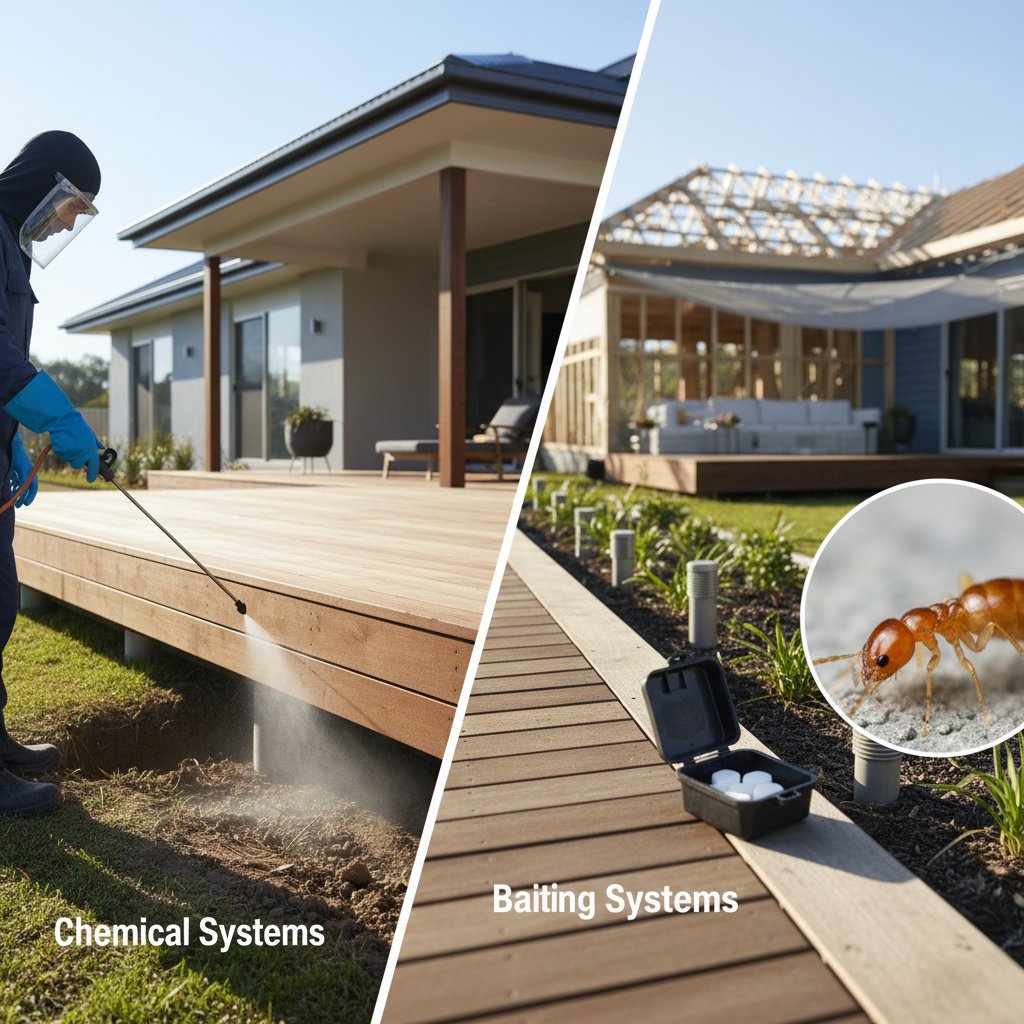
Your gorgeous timber deck or those essential roof trusses overhead represent a serious investment. They're also basically an all-you-can-eat buffet for termites if you're not careful. The protection landscape has shifted significantly in 2024, with new formulations, smarter baiting tech, and some hard-earned lessons about what actually works in the real world. Let's cut through the marketing fluff and talk about what's genuinely keeping termites at bay.
The State of Play: Chemical vs. Baiting Systems in 2024
1. Liquid Chemical Barriers Have Gone High-Tech
The old-school termiticides your dad used? They're ancient history. Modern non-repellent formulations like fipronil and imidacloprid work completely differently. Instead of creating a chemical wall that termites avoid, these newer products let termites pass through treated zones. The kicker? They pick up lethal doses without realizing it and carry the chemical back to the colony on their bodies. It's basically biological warfare, and it's devastatingly effective.
Application methods have evolved too. For timber decking, precision injection systems can treat specific posts and bearers without disturbing your entire outdoor living space. Expect to pay between $800-$1,500 for a decent-sized deck treatment, with protection lasting 5-8 years depending on soil conditions and rainfall. For roof trusses, pre-construction treatment remains your best bet—around $2-$4 per linear meter of timber, which is pocket change compared to replacement costs.
The catch? Chemical barriers demand proper installation. A gap of just 50mm in your treated zone creates a highway for determined termites. Professional application isn't optional here; it's the difference between protection and throwing money away.
2. Baiting Systems Finally Deliver on Their Promise
Baiting technology struggled for years with one fundamental problem: termites had to find the stations and actually eat the bait. 2024 has changed that equation. New attractant formulations using cellulose matrices and feeding stimulants have boosted discovery rates by roughly 60% compared to systems from five years ago.
Modern baiting stations work on a simple principle—give termites something more appealing than your deck posts. Once they're feeding consistently (usually 2-4 weeks), you swap in the active ingredient, typically chitin synthesis inhibitors. These prevent termites from molting, leading to colony collapse over 8-12 weeks. For a typical residential property, you're looking at $2,000-$3,500 for installation plus $300-$500 annual monitoring fees.
The beauty of baiting? It's genuinely colony-focused. Kill the queen and the breeding workers, and you've eliminated the threat, not just moved it next door. That said, baiting requires patience and consistent monitoring. Miss a quarterly inspection, and you might not catch a new colony moving in.
3. Hybrid Approaches Are Winning the Long Game
Here's what the smart money is doing in 2024: combining both methods strategically. Chemical barriers around high-risk structural elements (like deck posts embedded in concrete piers or critical roof truss bearers) paired with perimeter baiting stations create redundant protection.
This approach costs more upfront—figure $3,500-$5,000 for a comprehensive system on an average property. But the failure rate drops to nearly zero. You're essentially forcing termites to run a gauntlet where they either encounter lethal chemicals directly or get drawn to baiting stations before they reach your timber.
Professional pest controllers report that hybrid systems reduce callback rates by about 85% compared to single-method approaches. That's not marketing spin; that's fewer panicked homeowners discovering termite damage years after initial treatment.
4. Physical Barriers Still Have Their Place
Sometimes the old ways work best. Stainless steel mesh and granite particle barriers create actual physical obstacles that termites can't penetrate. For new deck construction, installing mesh shields around post bases adds about $50-$80 per post but provides permanent protection that never degrades.
The limitation? Physical barriers only work where you install them. They're fantastic for protecting specific elements but useless against aerial termite entry points or gaps in coverage. Think of them as part of your defense strategy, not the whole solution.
5. Monitoring Technology Has Entered the Chat
The game-changer in 2024 isn't necessarily how we kill termites—it's how we detect them. Acoustic sensors and thermal imaging now catch infestations weeks or months earlier than visual inspections alone. Some baiting systems include wireless monitoring that alerts your pest controller the moment termites start feeding.
This early warning capability matters enormously for high-value timber structures. Catching an infestation when it's 50 termites versus 50,000 termites means the difference between a $500 treatment and a $15,000 repair bill. Smart monitoring systems add $400-$800 to initial setup costs but pay for themselves the first time they prevent major damage.
What Actually Works Right Now
The honest answer? It depends on your specific situation, but here's the reality: chemical barriers excel at immediate protection for new construction or known high-risk areas. Baiting systems shine for ongoing colony elimination and environmental sensitivity. Hybrid approaches cost more but sleep-better-at-night reliability has real value.
Whatever route you choose, skip the DIY heroics on this one. Professional installation and monitoring aren't expensive insurance—they're the actual product you're buying. Those timber structures above and below your home are too valuable to protect with crossed fingers and hardware store products.