Why most Termite protection for timber decking and wooden roof trusses: Chemical vs. baiting systems projects fail (and how yours won't)
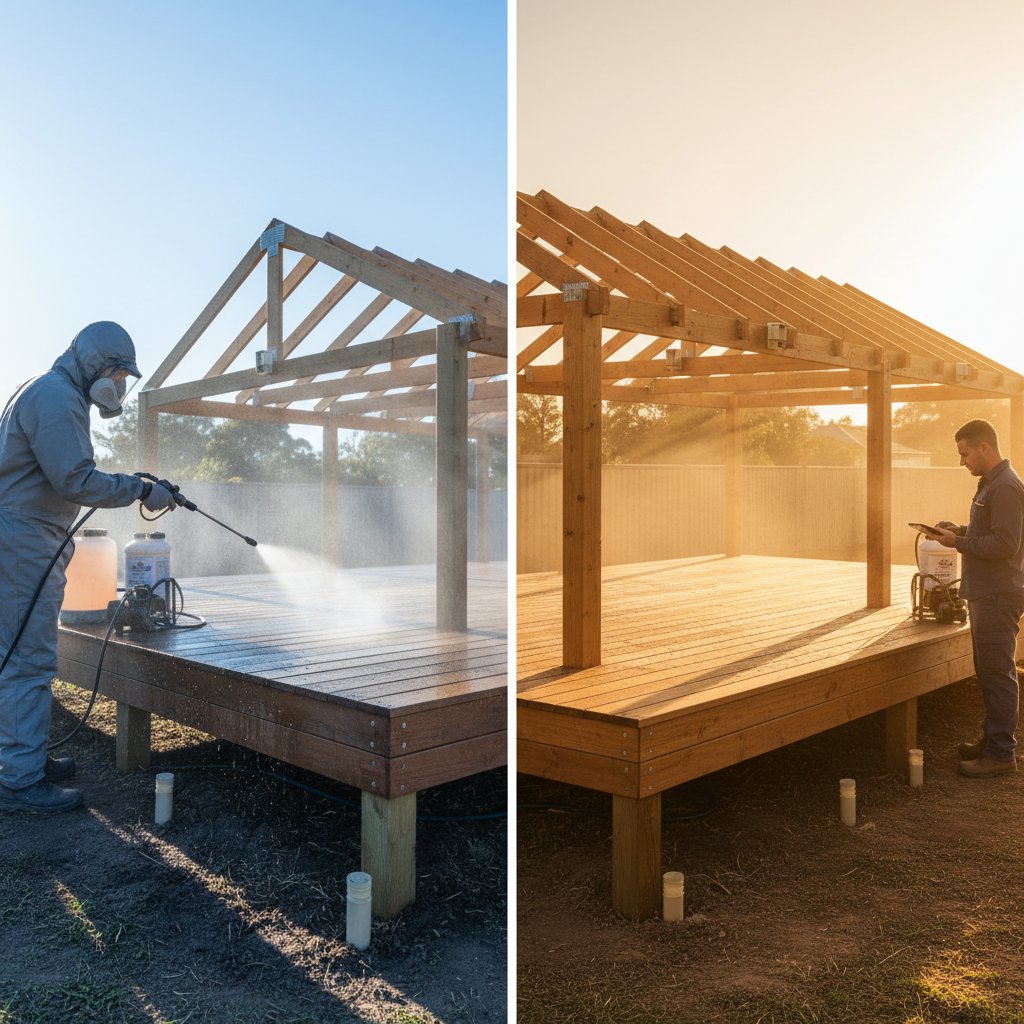
The $15,000 Mistake That Could Have Been Avoided
Picture this: You've just invested in gorgeous timber decking that wraps around your home, or you've completed a major renovation with exposed wooden roof trusses. Fast forward 18 months, and you're staring at crumbling wood and a pest control bill that makes your eyes water. The kicker? You actually installed termite protection—it just wasn't the right kind, or worse, it wasn't installed properly.
Here's the uncomfortable truth: roughly 60% of termite protection systems fail within the first three years. Not because the products don't work, but because homeowners and contractors make preventable mistakes during selection and installation.
Why Termite Barriers Fail More Often Than They Should
The biggest culprit? Picking a system based on price alone. I've watched countless property owners choose the cheapest chemical barrier option, only to discover that subterranean termites found a gap no wider than a credit card to bypass the entire treatment.
The Chemical Barrier Trap
Chemical barriers sound straightforward—spray a liquid termiticide around your foundation and timber structures, creating an invisible wall. The problem starts when contractors rush the job. A proper chemical barrier requires drilling every 200-300mm around the perimeter and injecting treatment at specific depths. Skip a few holes to save time? You've just created a termite highway.
Even worse, most liquid treatments degrade over time. That five-year warranty sounds great until you realize the chemical starts breaking down in year three, especially in areas with high rainfall or sandy soil that drains quickly.
The Baiting System Blindspot
Baiting systems fail for different reasons. They require ongoing monitoring—usually every 6-8 weeks. Miss a few inspections because you're busy or your pest control company gets sloppy, and termites can establish a colony before the bait stations even detect activity. I've seen homeowners spend $2,500 on a baiting system only to abandon monitoring after year one. That's like buying a security system and never turning it on.
Red Flags You're Headed for Failure
Your antenna should go up if you notice these warning signs:
- A contractor quotes your job in under 20 minutes without inspecting soil type or moisture levels
- The price seems suspiciously low—quality chemical treatments typically run $2,000-$4,000 for an average home, while comprehensive baiting systems start around $2,500-$3,500
- Nobody mentions follow-up inspections or maintenance schedules
- The installer can't explain exactly which termiticide they're using or show you the product label
- You're promised a "lifetime guarantee" with no clear terms about what happens if termites appear
How to Actually Protect Your Investment
Step 1: Match the System to Your Situation
For new construction with exposed timber trusses, chemical barriers installed during building provide comprehensive protection. The soil can be treated before concrete slabs go down, and timbers can be directly treated—something that's nearly impossible to do properly after construction.
For existing decking, especially elevated timber decks, baiting systems often make more sense. They're less invasive and don't require drilling through finished surfaces. Plus, they can be positioned exactly where termite activity is most likely.
Step 2: Demand a Soil Analysis First
Sandy, well-drained soil? Chemical barriers may need reapplication every 3-4 years instead of the advertised 5-8. Clay soil with poor drainage? Certain termiticides perform better than others. This 30-minute test costs around $150-250 but can save you thousands in failed treatments.
Step 3: Get the Installation Details in Writing
Your contract should specify drill hole spacing, treatment depth, chemical concentration, and total volume used. For a standard home perimeter, expect 100-200 liters of diluted termiticide. Anything significantly less means corners are being cut.
Step 4: Build in Mandatory Inspections
Whether you choose chemical or baiting, schedule annual inspections minimum. Better yet, opt for quarterly checks during the first two years. Most termite damage occurs because someone noticed the problem nine months too late.
The Hybrid Approach Nobody Talks About
Here's what experienced builders do for high-value timber installations: they combine both methods. Chemical barriers go in during construction for immediate protection, while baiting stations provide long-term monitoring and catch any termites that breach the chemical zone. Yes, it costs 40-50% more upfront (around $4,500-6,000 total), but insurance companies love it, and resale values reflect the comprehensive protection.
Your 90-Day Action Plan
Stop thinking about termite protection as a one-time expense. It's an ongoing commitment, like maintaining your roof or servicing your HVAC. Budget $300-500 annually for inspections and monitoring, and you'll avoid the $8,000-15,000 remediation bills that hit unprepared homeowners.
Get three quotes minimum, but don't automatically choose the middle one. Choose the contractor who asks the most questions about your property, explains exactly what they'll do, and provides references from jobs completed at least three years ago. Call those references. Ask if termites appeared and how the company responded.
Your timber deck and roof trusses represent a significant investment. Protecting them properly isn't complicated—it just requires doing the homework that most people skip.